Policy & Grid11 min read
Export limitation and active power control for PV systems
How export limits are enforced technically, from simple fixed caps to dynamic zero-export control loops, and what to check when a limiter is not behaving as expected.
Why your inverter throttles at noon, what a G99 or VDE-AR-N 4105 application actually reviews, and how export limits are enforced.
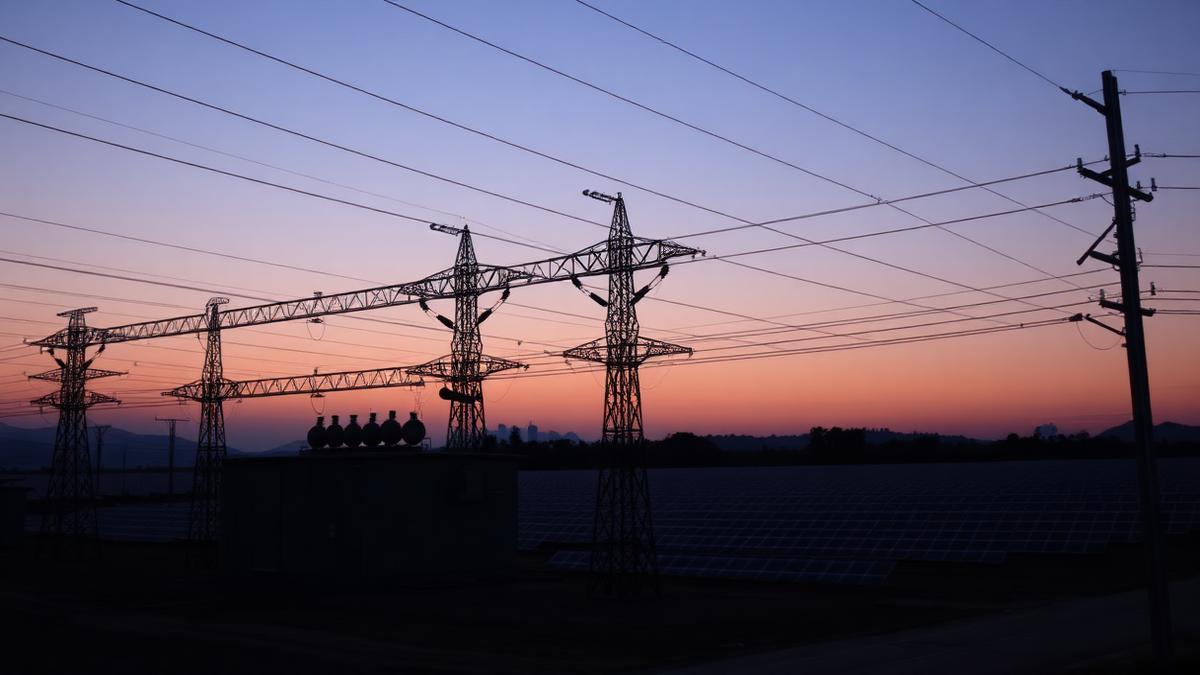
A solar array is not a private appliance. The moment it can push current into the network it becomes a generator on someone else''s system, and that system has rules. Most homeowners meet those rules only as a line on a quote — "grid application included" — and then as a puzzling behaviour: an inverter that refuses to exceed a certain output, or shuts down entirely on a hot afternoon.
Distribution networks were built to move power one direction, from substation to consumer. Reversing that flow on a residential feeder creates three concerns.
Voltage rise. Push current back up a cable and the voltage at the injection point rises above the voltage at the transformer. Every distribution network has a statutory voltage band — in Europe, 230 V +10 %/−6 % under EN 50160. When many houses on a weak rural feeder export simultaneously, the end-of-line voltage can breach the upper limit.
Thermal capacity. Cables and transformers have current ratings. Reverse flow at midday can exceed the rating that was sized for evening demand.
Protection coordination and islanding. If the grid supply fails, any local generator must disconnect promptly. An "island" of energised network fed by rooftop inverters is a hazard to line workers who have isolated the feeder and expect it to be dead.
Everything in the connection process exists to address one of these three.
Terminology differs by country — G98 and G99 in Great Britain, VDE-AR-N 4105 in Germany, IEEE 1547 as the underlying standard in North America — but the structure is consistent.
Below a threshold, it is notification. Small single-phase systems, typically up to 3.68 kW per phase in the UK or 600 W for plug-in balcony systems in Germany, can be connected first and registered after, because the network operator has already assessed that a system that size cannot cause a problem.
Above it, it is application and approval. The operator models your connection point, checks voltage rise and thermal loading with your generation added, and either approves, approves with conditions, or requires reinforcement. Conditions typically mean an export limit. Reinforcement means someone pays for a bigger cable or transformer, and that someone is often you.
Timescales run from a few weeks to several months. The single most common cause of delay is an incomplete application — missing inverter type-test certificates, an unclear single-line diagram, or an unstated existing generator on the same connection.
Network operators do not test your inverter. They rely on the manufacturer holding a type-test certificate demonstrating compliance with the national grid code: anti-islanding detection, voltage and frequency ride-through envelopes, reactive power capability, and rate-of-change-of-frequency protection settings.
Practical consequence: install an inverter that is not on the approved list for your country and the application will be refused, regardless of how good the hardware is. Check the certificate covers the specific model and firmware, not a sibling product.
Where the network cannot absorb your full output, the operator permits the array but caps what leaves the property. This is enforced by a current transformer or meter at the grid connection point feeding back to the inverter, which reduces output in real time to hold export at or below the limit.
Two things surprise people. First, the limit applies to export, not to generation — you can still consume everything you produce, so a 10 kW array with a 5 kW export limit loses far less than half its value. Second, the limitation hardware is a safety-related function and the operator may require it to fail safe, meaning a communications fault between the meter and the inverter shuts generation down rather than letting it run unlimited.
If you are export-limited, storage and load shifting stop being optional optimisations. Every kilowatt-hour used on site is a kilowatt-hour that would otherwise have been curtailed.
Two mechanisms, frequently conflated.
Temperature derating. The inverter reduces output to protect its own electronics when internal temperature rises — common in units mounted in direct sun or in an unventilated loft. Fix: relocate or shade the inverter.
Volt-watt response. Grid codes require inverters to reduce active power as terminal voltage approaches the upper statutory limit, and to disconnect if it exceeds it. If your inverter logs show output falling as voltage climbs toward 253 V, the network is telling you the feeder is at its limit. Fix: this one is the operator''s. A voltage complaint is a legitimate request, and the remedy is usually a transformer tap change.
Net metering spins the meter backwards, valuing exports at the retail rate. Generous, increasingly rare, and being withdrawn in most markets as penetration rises.
Net billing meters import and export separately and pays a lower rate for export. Now the mainstream arrangement.
Feed-in tariff pays a fixed contracted rate per kilowatt-hour generated or exported, usually for a defined term. Largely historic for new installations.
Which you get determines almost everything about your system economics, and it is set by policy rather than by your installer. Read the terms of the specific scheme before sizing the array: a market paying 0.05 €/kWh for export rewards a smaller array matched to consumption, while net metering rewards filling the roof.
Can I install solar without telling the network operator? No. Unregistered generation is a breach of your connection agreement and can invalidate household insurance. It also makes the system a hazard during a fault.
Will my system work in a power cut? Not unless it was specifically designed to. A standard grid-tied inverter must disconnect within a fraction of a second when the grid fails. Backup requires a hybrid inverter and a transfer arrangement that isolates your installation from the network.
Who pays for reinforcement? It varies. Some jurisdictions socialise the cost, others charge the connecting party. Ask before committing to a system size that triggers it.
Can I increase my array later? Any increase in generation capacity requires a new or amended application. Approval for 4 kW is not approval for 8 kW.
The grid code is not bureaucracy for its own sake — it is the reason a network with millions of small generators stays inside its voltage band and stays safe to work on. Understanding it turns two frustrating experiences, the slow application and the throttled afternoon, into predictable engineering constraints you can design around.
Standards are cited for orientation. Always work from the current published edition and the national annex that applies in your jurisdiction.
First published.
Technical review: worked examples re-derived, standards references checked against current editions, sources verified.
How export limits are enforced technically, from simple fixed caps to dynamic zero-export control loops, and what to check when a limiter is not behaving as expected.
How grid codes translate into the voltage, frequency and trip-time parameters programmed into a PV inverter, and why getting them wrong causes rejected commissioning.
How energy communities and shared solar schemes work under EU RED II/III, including allocation models, legal structures, and typical member economics.